Outsourced IT Support Services – An Engineer’s Perspective
By Paul Jackson, Head IT Engineer at Digi Toolbox After more than 25 years working in IT and the last 8 years here at Digi
By Jamie Peel, Senior Account Manager at Digi Toolbox
Over the years, I’ve worked with a wide range of businesses, plus one thing I’ve noticed is that many companies don’t just want good IT support — they want clarity, consistency, plus someone they can rely on.
That’s where I believe properly managed IT support services make a real difference.
At Digi Toolbox, we support businesses every day with proactive IT support, monitoring, cybersecurity, user support, plus long-term planning. From my perspective as an account manager, the biggest value often comes from something much simpler — communication.
A lot of businesses feel overwhelmed by technical jargon. They don’t necessarily want to know every technical detail behind an issue. They simply want to understand what’s happening, how it impacts them, plus what’s being done to fix it.
That’s a huge part of my role.
More Than Just IT Support
When people hear the phrase managed IT support services, they often think about fixing computers when something breaks.
In reality, it’s much more than that.
Good managed support is about making sure businesses can operate efficiently without constantly worrying about their technology.
That includes everything from:
At Digi Toolbox, the goal is always to prevent problems before they disrupt the business.
From an account management perspective, that proactive approach makes a massive difference because clients feel supported rather than reactive.
Why Having a Dedicated Account Manager Matters
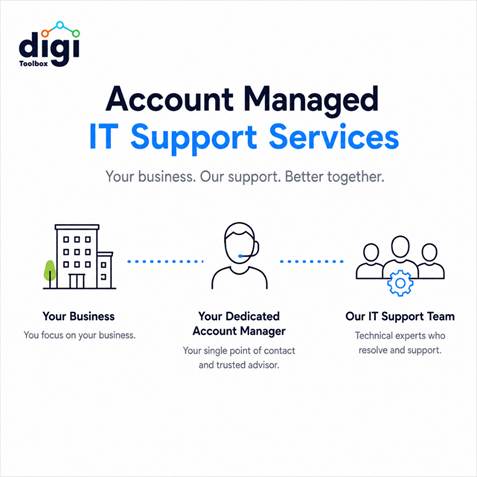
One of the things I genuinely believe sets managed services apart is having a dedicated point of contact.
Technology can become complicated very quickly, especially when issues arise unexpectedly. Businesses don’t always have the time or technical background to interpret technical explanations from engineers.
That’s where I come in.
Part of my job is acting as the bridge between our clients plus the IT team.
I work closely with both sides to ensure:
In many cases, clients simply want reassurance plus clarity.
They want someone who understands their business, knows their setup, plus can explain things in plain English rather than technical jargon.
That relationship becomes incredibly valuable over time.
Building Long-Term Relationships
For me, managed IT support works best when it feels like a partnership.
The businesses we support are not just ticket numbers or support requests. Over time, you get to know how they operate, what their priorities are, plus what challenges they face.
That understanding helps us provide better support because we’re not just reacting to issues — we’re thinking ahead.
Sometimes that means helping clients plan for growth. Other times, it’s advising on security, improving infrastructure, or simply making sure their systems continue to support the business effectively.
Having an account manager involved means there’s always continuity plus someone looking at the bigger picture.
The Importance of Communication
In my experience, communication is often what businesses value most.
Even when there’s a technical issue, people are usually far more understanding if they know:
Without communication, even small issues can become frustrating.
That’s why I see account management as such an important part of managed IT support services. It keeps everything organised, transparent, plus focused on the client experience.
Supporting Businesses Proactively
One thing I always say is that the best IT support is often the support you never notice.
A huge amount of work happens behind the scenes:
Clients may never see most of that work happening, but it plays a critical role in keeping businesses operational.
When managed properly, IT becomes something businesses can rely on rather than worry about.
Why Businesses Choose Managed IT Support Services
From what I’ve seen, businesses choose managed IT support services because they want stability plus peace of mind.
They want to know that:
Having both a technical support team plus a dedicated account manager creates a much smoother experience.
It means clients have access to technical expertise while also having someone who understands the commercial plus operational side of their business.
A Personal Approach Makes the Difference
At Digi Toolbox, we try to keep things straightforward.
We know every business is different, so support should never feel generic.
As an account manager, I always try to approach things from the client’s perspective. If something needs explaining, I explain it clearly. If there’s a challenge, I make sure there’s a plan in place.
That personal approach is what builds trust over time.
Frequently Asked Questions
1. What are managed IT support services?
Managed IT support services provide ongoing management of your business’s IT systems, rather than simply fixing problems when they occur. This typically includes proactive monitoring, cybersecurity, software updates, backups, user support and strategic advice to keep your business running smoothly.
2. What are the benefits of managed IT support services?
Managed IT support helps reduce downtime, improve cybersecurity, increase productivity and provide predictable IT costs. Businesses also benefit from having experienced professionals monitoring their systems and resolving issues before they become major problems.
3. Why is having a dedicated account manager important?
A dedicated account manager acts as your single point of contact, ensuring clear communication between your business and the technical support team. They understand your business, explain technical issues in plain English and help plan your IT strategy as your company grows.
4. Can managed IT support help prevent cyber attacks?
Yes. Managed IT support services often include continuous monitoring, security updates, antivirus protection, backup management and advice on best practices. While no system can guarantee complete protection, proactive management significantly reduces the risk of cyber threats affecting your business.
5. Is managed IT support suitable for small businesses?
Absolutely. Managed IT support is ideal for businesses of all sizes. Whether you have five employees or hundreds, having expert support allows you to focus on running your business while your IT infrastructure is professionally managed.
6. How do I choose the right managed IT support provider?
Look for a provider that offers proactive monitoring, fast response times, strong cybersecurity expertise and clear communication. It’s also beneficial to choose a company that provides a dedicated account manager who understands your business and can offer strategic advice as your requirements evolve.
Final Thoughts
Managed IT support services are not just about solving technical problems.
From my perspective, they’re about helping businesses operate with confidence.
Technology should support your business, not slow it down or create unnecessary stress.
Having the right support team in place, backed by clear communication plus a dedicated account manager, makes a huge difference day to day.
Let’s Talk
If you’d like to understand how managed IT support services could benefit your business, we’d be happy to help.
Learn more about our services here:
https://digitoolbox.com/it-support-services/
Or get in touch with the team here:
https://digitoolbox.com/contact-us/
Let’s make IT support simpler, clearer, plus more effective for your business.
By Paul Jackson, Head IT Engineer at Digi Toolbox After more than 25 years working in IT and the last 8 years here at Digi

Accountancy firms rely on technology more than almost any other type of business. Client records, financial data, tax software, and cloud accounting platforms are all

Downtime is one of the biggest challenges facing modern businesses. When computers fail, networks slow down, or software stops working, productivity quickly grinds to a
At Digi Toolbox, we’re more than just a digital agency—we’re a partner dedicated to understanding your business and helping you achieve your goals. That’s why we take a consultative approach to discovery, ensuring that every solution we provide is tailored to your unique requirements.
We offer a free discovery consultation, which can be conducted in the way that suits you best: face-to-face, at our office, via Microsoft Teams, or over the phone. This flexibility ensures that no matter how you choose to connect with our digital agency, the process is convenient and designed around your needs.
To deepen our understanding of your business, we also provide free audits covering digital marketing, IT, and telephony. These audits give us valuable insights into your existing systems, allowing our team to identify opportunities for improvement and create bespoke strategies. By taking the time to analyse your business, we ensure that every recommendation we make is perfectly aligned with your objectives.
At Digi Toolbox, we take pride in being a digital agency that puts your business first. With our consultative approach, we’ll deliver personalised solutions to drive your success. Let’s start the conversation. Contact us today to discuss our digital agency solutions today!